Spine & Joint Healing Centre

Spine and Joint Healing Centre

shoulder pain

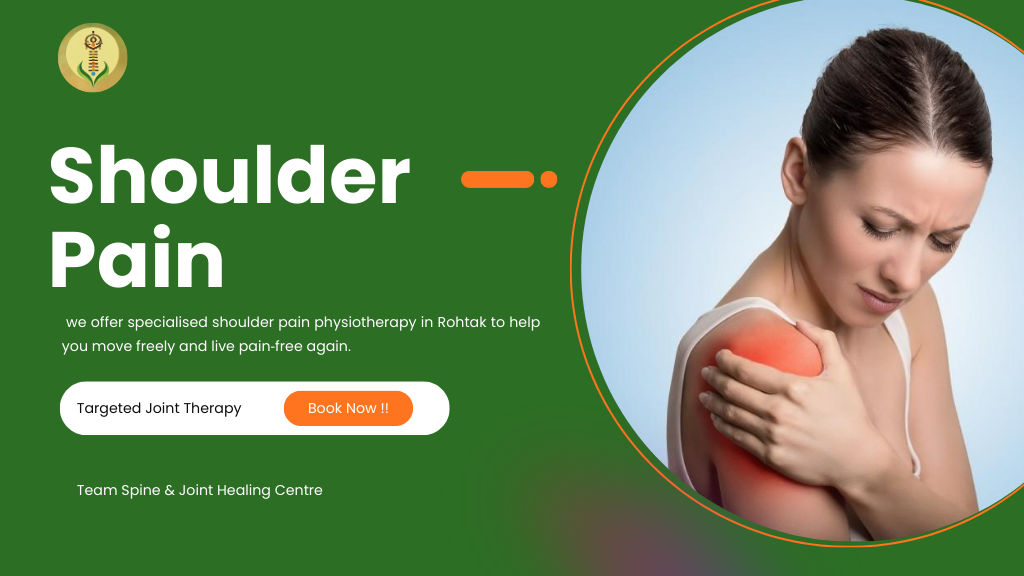
9 Effective Physiotherapy Treatments for Shoulder Pain in Rohtak

Shoulder pain can turn everyday tasks into a struggle. Simple activities like lifting your arm, reaching overhead, or even sleeping on your side can feel impossible when shoulder pain is constant. For people in Rohtak, timely physiotherapy at Spine and Joint Healing Centre offers a safe, non‑surgical way to get lasting relief and restore normal movement. At Spine and Joint Healing Centre, Rohtak, we specialise in diagnosing the root cause of shoulder pain and designing personalised physiotherapy plans tailored to your lifestyle, work demands, and activity level. What causes shoulder pain? To treat shoulder pain effectively, it is important to understand what is driving the problem. Common causes of shoulder pain in Rohtak include: Rotator cuff strain or tear Frozen shoulder (adhesive capsulitis) Tendinitis and bursitis around the shoulder joint Shoulder impingement syndrome Shoulder dislocation or joint instability Osteoarthritis or age‑related wear and tear Poor posture from long hours at a desk or mobile use Sports injuries and gym overuse A detailed assessment at Spine and Joint Healing Centre, Rohtak, helps identify whether your shoulder pain is coming from muscles, tendons, ligaments, nerves, or the joint itself. 1. Detailed assessment and diagnosis Every successful treatment for shoulder pain starts with a proper diagnosis. During your first visit, our physiotherapists: Take a thorough history of your shoulder pain Assess posture, strength, flexibility, and joint movement Perform special clinical tests to identify the exact structure involved This precise evaluation ensures you receive the right physiotherapy treatment rather than generic exercises that may not help your shoulder pain. 2. Manual therapy for immediate relief Hands‑on manual therapy is one of the most effective ways to reduce shoulder pain and stiffness. At Spine and Joint Healing Centre, Rohtak, we use: Joint mobilisations to improve shoulder joint movement Soft tissue release to relax tight muscles Trigger point therapy to reduce referred pain around the neck and upper back These techniques help decrease shoulder pain, improve circulation, and allow you to move your arm more comfortably. 3. Targeted strengthening exercises Weakness around the rotator cuff and shoulder blade often leads to recurring shoulder pain. Your physiotherapist will design a strengthening program that may include: Rotator cuff strengthening with resistance bands Scapular (shoulder blade) stability training Progressive strengthening for daily tasks and sports For example, you might start with isometric exercises (pushing gently without moving the joint) and gradually progress to resistance band rotations to build pain‑free strength. 4. Stretching and mobility work When the shoulder joint capsule and surrounding muscles become tight, shoulder pain and stiffness increase. Physiotherapy in Rohtak for shoulder pain commonly includes: Gentle capsule stretching to improve rotation and elevation Chest, neck, and upper‑back stretches to correct rounded posture Guided range‑of‑motion exercises within a pain‑free zone Consistent stretching under guidance helps restore lost movement and makes overhead activities less painful. 5. Posture correction and ergonomic advice Many people in Rohtak work long hours on laptops, mobiles, or at desks, which can worsen shoulder pain by straining the neck and upper back. At Spine and Joint Healing Centre, your treatment plan may include: Posture correction exercises for the neck, back, and shoulders Ergonomic advice for office, home, and study setups Education on how to sit, stand, and work without triggering shoulder pain By correcting posture, you reduce stress on the shoulder joint and support long‑term recovery. FAQs on Shoulder Pain Physiotherapy in Rohtak Q1. When should I see a physiotherapist for shoulder pain in Rohtak? You should see a physiotherapist if shoulder pain lasts more than a few days, keeps coming back, affects your sleep, or makes it difficult to lift your arm or do daily activities. Early assessment at Spine and Joint Healing Centre in Rohtak helps prevent shoulder pain from becoming a chronic or frozen shoulder problem. Q2. How can physiotherapy help relieve shoulder pain? Physiotherapy helps reduce shoulder pain by improving joint mobility, relaxing tight muscles, strengthening weak areas, and correcting posture. At Spine and Joint Healing Centre, Rohtak, your physiotherapist uses manual therapy, exercises, and modalities like heat, cold, or electrotherapy to target the root cause of shoulder pain rather than just masking symptoms. Q3. How many physiotherapy sessions are usually needed for shoulder pain? The number of sessions depends on the cause and severity of your shoulder pain, as well as how long you have had it. Many patients in Rohtak start noticing improvement within a few sessions at Spine and Joint Healing Centre, but conditions like frozen shoulder or long‑standing injuries may require several weeks of regular physiotherapy. Q4. Is physiotherapy for shoulder pain painful or risky? Physiotherapy for shoulder pain is generally safe when done by a qualified physiotherapist and is designed to stay within your tolerance level. At Spine and Joint Healing Centre in Rohtak, treatments are progressed gradually so that exercises and manual techniques relieve shoulder pain rather than aggravate it, with clear guidance on what to avoid. Q5. Can physiotherapy help me avoid surgery for shoulder pain? In many cases, timely physiotherapy can reduce shoulder pain, improve strength and mobility, and help you avoid or delay surgery. By addressing posture issues, muscle imbalances, and faulty movement patterns, the team at Spine and Joint Healing Centre, Rohtak, focuses on conservative management first, and will refer you to an orthopaedic specialist only if necessary. Q6. What should I wear for my shoulder pain physiotherapy session in Rohtak? For your appointment at Spine and Joint Healing Centre, it is best to wear a loose T‑shirt or sleeveless top that allows easy access to your shoulder. Comfortable clothing helps your physiotherapist assess shoulder pain properly and perform manual therapy and exercises without restriction. When should you see a physiotherapist in Rohtak for shoulder pain? Spine and Joint Healing Centre is dedicated to non‑surgical, evidence‑based treatment of spine and joint problems, with a strong focus on shoulder pain. Patients in Rohtak choose us because: Experienced physiotherapists with expertise in shoulder, spine, and joint conditions Detailed, one‑on‑one assessments before starting treatment Customised treatment plans rather than generic exercise sheets Use of

9 Effective Physiotherapy Treatments for Shoulder Pain in Rohtak Read More »
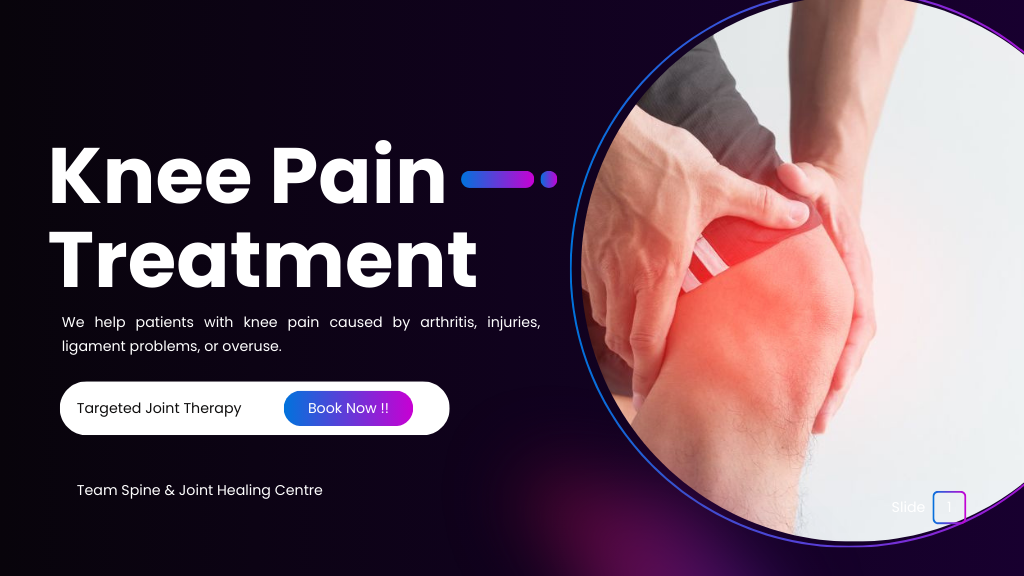
Knee Pain Treatment in Rohtak – Non-Surgical Relief at Spine and Joint Healing Centre Rohtak

No. 1 Knee Pain Treatment in Rohtak

Knee pain is one of the most common problems in Rohtak, affecting school-going children, working professionals, athletes and senior citizens alike. When walking, climbing stairs or even standing becomes painful, it directly affects your work, routine and confidence. At Spine and Joint Healing Centre Rohtak, our focus is to provide safe, effective and non-surgical knee pain treatment so that you can return to an active life without unnecessary medicines or operations. Visit our Clinic Click here Why Knee Pain Is So Common in Rohtak Lifestyle changes, long sitting hours, two-wheeler use, lack of exercise and previous injuries all contribute to knee pain. Some of the most frequent reasons we see in our Rohtak clinic are: Osteoarthritis (घुटनों का घिसाव / उम्र के साथ घुटनों में दर्द) Old ligament injuries (ACL / meniscus injuries) Sports injuries in young adults and students Post-fracture or post-surgery stiffness and weakness Overweight and lack of muscle strength Incorrect posture and walking pattern Ignoring early knee pain often leads to more damage, increased stiffness and difficulty in walking. The earlier you start proper treatment, the better your chance to avoid surgery. When Should You See a Knee Pain Specialist in Rohtak? You should not delay consulting a knee pain specialist or physiotherapist in Rohtak if: Knee pain lasts more than 7–10 days Pain increases when climbing stairs, squatting or sitting cross-legged You feel clicking, locking or instability in the knee Swelling, stiffness or tightness is present, especially in the morning You are unable to walk long distances due to pain You have been advised surgery and want to explore non-surgical options first At Spine and Joint Healing Centre Rohtak, we assess the exact cause of your knee pain through detailed history, clinical tests and movement analysis before starting any treatment. Contact Now Non-Surgical Knee Pain Treatment at Spine and Joint Healing Centre Rohtak Our clinic specialises in non-surgical and conservative management of knee pain. The treatment is customised for every patient based on age, activity level, x‑ray/MRI reports and functional limitations. 1. Detailed Assessment Pain pattern and history Range of motion and joint stiffness Muscle strength and imbalance Gait (walking) and posture analysis Functional limitations (sitting, stairs, squatting, work demands) This helps us identify whether your knee pain is coming from cartilage wear, ligament issues, muscle weakness, alignment problems or referred pain from hip/spine. 2. Advanced Physiotherapy for Knee Pain Physiotherapy is the backbone of knee pain treatment in our Rohtak centre. It includes: Targeted strengthening exercises for quadriceps, hamstrings, hip and core muscles Stretching to reduce tightness in muscles around knee and hip Balance and proprioception training to improve joint stability Functional retraining for squatting, stair climbing and daily activities We design a step-by-step rehab plan so that exercises are safe, progressive and easy to continue at home. 3. Manual Therapy & Joint Mobilisation Hands-on techniques are used to: Improve knee joint movement Reduce stiffness and compression Release tight structures around the knee Correct movement pattern Gentle joint mobilisation and soft tissue release can significantly reduce pain and improve flexibility when done by trained professionals. 4. Neurotherapy, Chiropractic & Osteopathy-Based Approaches In selected cases, knee pain is linked to spine, hip or nerve dysfunction. At Spine and Joint Healing Centre Rohtak, we use: Neurotherapy techniques to improve nerve supply and muscle control Chiropractic and osteopathic principles to correct joint alignment and biomechanical stress Spine and hip assessment to treat root causes contributing to knee overload This holistic approach is especially important in chronic knee pain and in patients with combined spine and knee problems. 5. Pain Relief Modalities (as Needed) Where required, we may combine the above with: Electrotherapy (TENS, ultrasound, etc.) for short-term pain relief Hot/cold therapy for inflammation control Taping and bracing for additional stability during activities Our goal is not just to reduce pain temporarily, but to correct the underlying problem using a structured rehab programme. Knee Osteoarthritis (घुटनों का घिसाव) Treatment in Rohtak Knee osteoarthritis (OA) is very common after 40–45 years of age, especially in women. Symptoms include: Pain while walking or standing for long Difficulty in sitting cross-legged or using Indian toilets Morning stiffness and swelling Grinding or creaking sound in the knee Many patients are directly advised knee replacement, but in early and moderate stages, proper physiotherapy, lifestyle changes and weight management can delay or even avoid surgery. At Spine and Joint Healing Centre Rohtak, we focus on: Strengthening the muscles that support your knee joint Improving alignment and load distribution Teaching joint protection techniques for daily life Weight management advice and activity modification This can significantly reduce pain and improve walking capacity without surgery in many cases. Sports & Youth Knee Injuries in Rohtak Young people in Rohtak often suffer from: Ligament injuries (ACL / PCL) Meniscus (cartilage) tears Patellofemoral pain (pain around the kneecap) Overuse injuries from running, gym or sports We provide: Post-injury and post-surgery (if done) rehab Strength, balance and agility training Return-to-sport protocols Injury prevention guidance Our aim is to help you return safely to your sport or gym without re-injury. Home Care Tips for Knee Pain Patients in Rohtak Along with clinic-based treatment, we guide you on simple but effective home care: Avoid sitting cross-legged and deep squats in painful phases Use western toilet instead of Indian toilet if knee OA is advanced Do prescribed strengthening and stretching exercises regularly Maintain healthy weight to reduce pressure on knees Wear supportive footwear with proper cushioning Use hot or cold packs as advised for pain and stiffness Following these small changes regularly can support long-term knee health. Why Choose Spine and Joint Healing Centre Rohtak for Knee Pain? Focus on non-surgical, evidence-based knee pain treatment Personalised assessment and one-to-one care Combination of physiotherapy, manual therapy, neurotherapy, chiropractic and rehab Special attention to both knee and spine alignment and movement Clear home exercise plans and follow-up guidance Our mission is to help people in Rohtak walk pain-free, climb stairs confidently and return to their routine without depending on long-term painkillers or early surgery.

No. 1 Knee Pain Treatment in Rohtak Read More »

Home
About Us
Mail
Free Enquiry
Scroll to Top

Free Enquiry Form